
BRAMBLING, FRINGILLA MONTIFRINGILLA

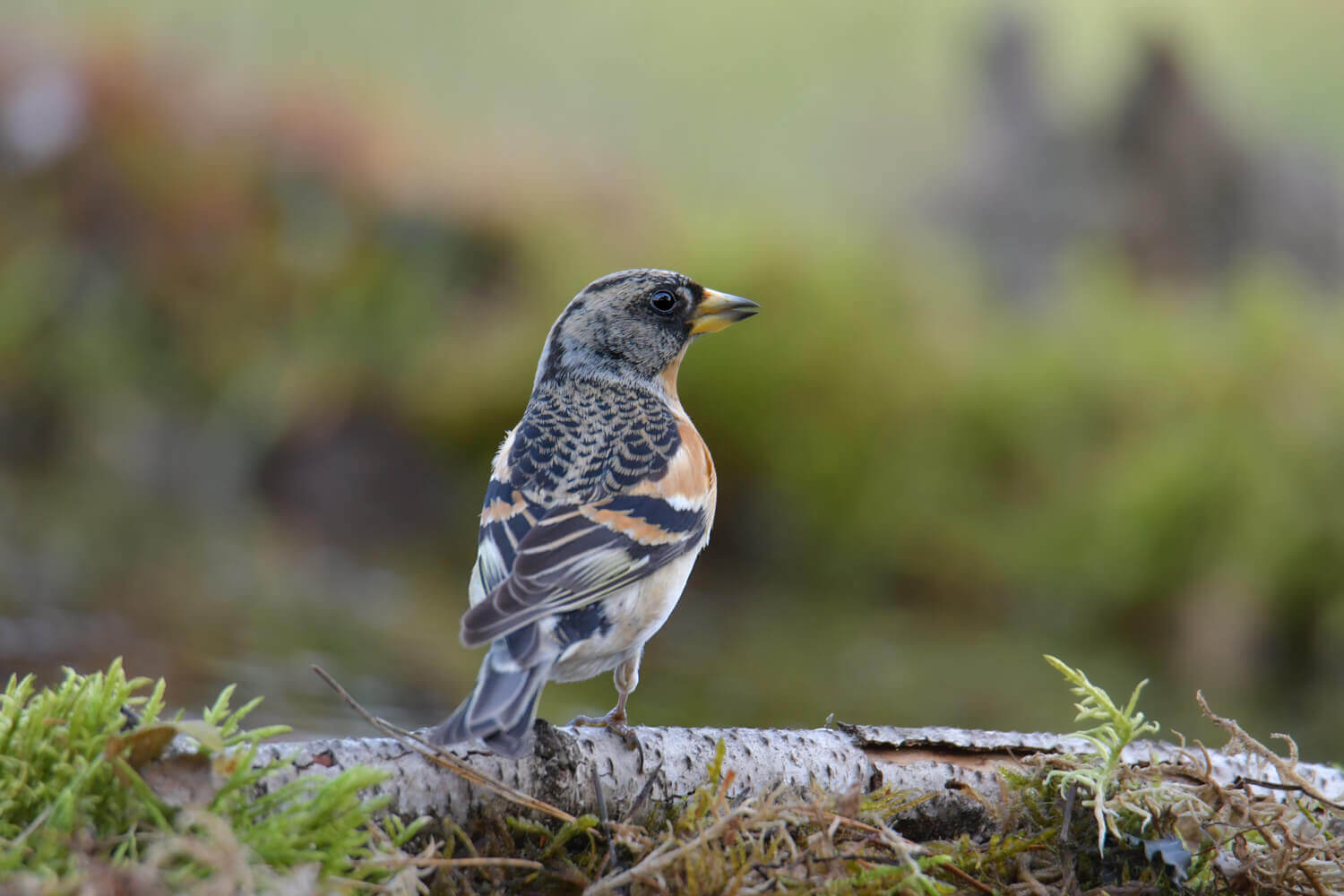


Brambling, Fringilla montifringilla
Size:
length about 14–16 cm (5.5–6.3 in), wingspan about 25–28 cm (10–11 in), weight about 17–30 g.
IOC (v15.2): order Passeriformes, family Fringillidae (finches). A close relative of the chaffinch; the male shows a rusty-orange wash on the breast and shoulders and – in flight – a white rump that the chaffinch lacks. It is not to be confused with the common swift (Apus apus), a bird of an entirely different shape and way of life; in Polish the two names, jer and jerzyk, are easy to mix up.
In winter the male’s head looks dull brown and scaly: pale feather fringes hide the dark centres. By spring those fringes have worn away and a black cap appears, without a separate breeding plumage having to grow in.
It breeds in the forests of northern Eurasia, from Scandinavia to Siberia. In Poland it is mainly a winter visitor. Numbers swing with the beech crop: after a heavy mast year bramblings may arrive in flocks, often with chaffinches, and feed under beech stands; in poor years they can be scarce or almost absent.
The diet is seeds, especially beech mast and other nuts, and in the breeding season also insects. In winter it can be found in deciduous and mixed woods, at woodland edges and in parks, and it sometimes comes to feeders.
Did you know?
The male’s black spring head does not require a new moult. In autumn each crown feather has a pale fringe; over the winter the fringes wear off, and it is this abrasion – not a separate breeding plumage – that reveals the glossy black just before the return to the breeding grounds.

