
COMMON MERGANSER, MERGUS MERGANSER
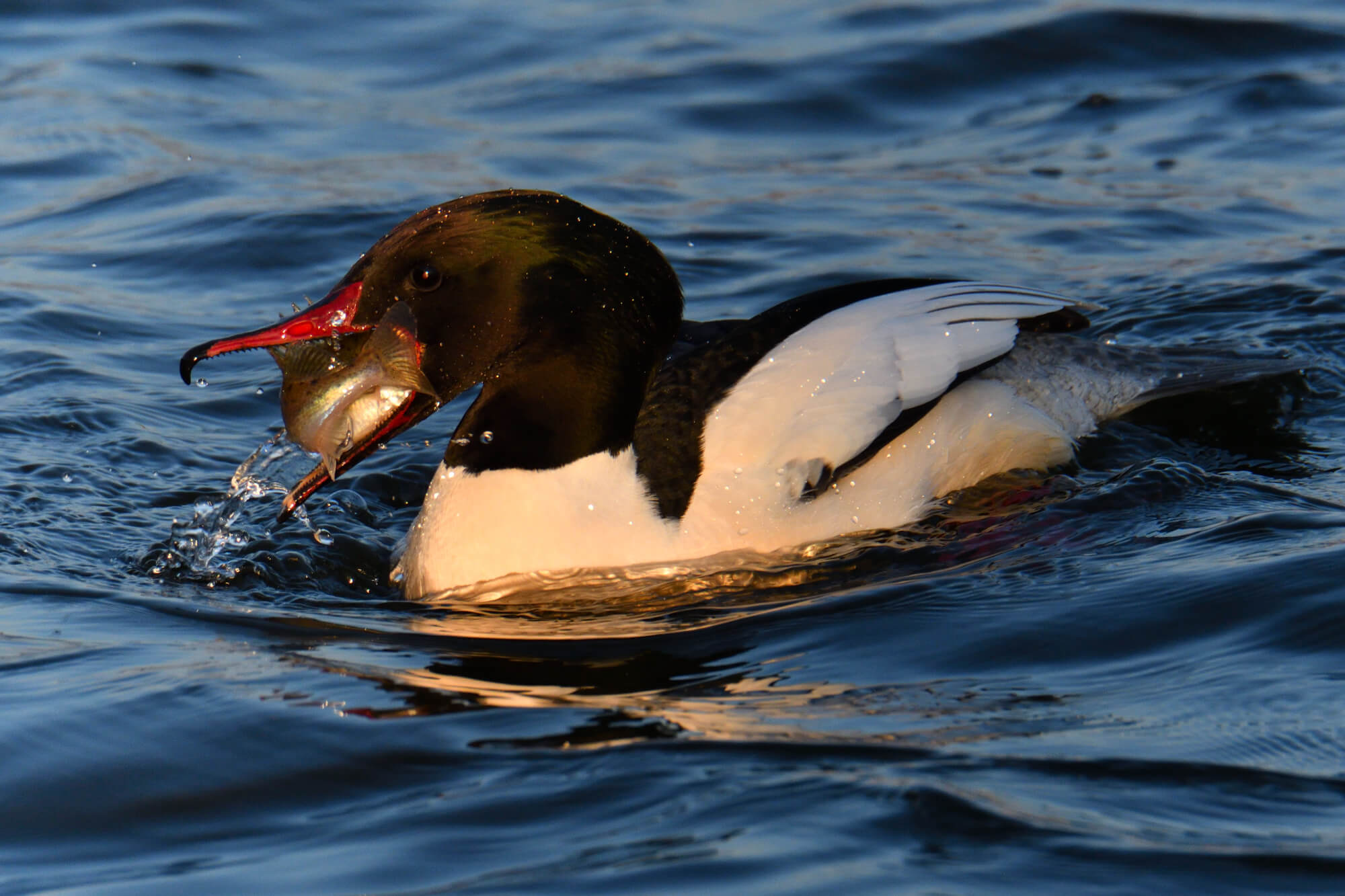
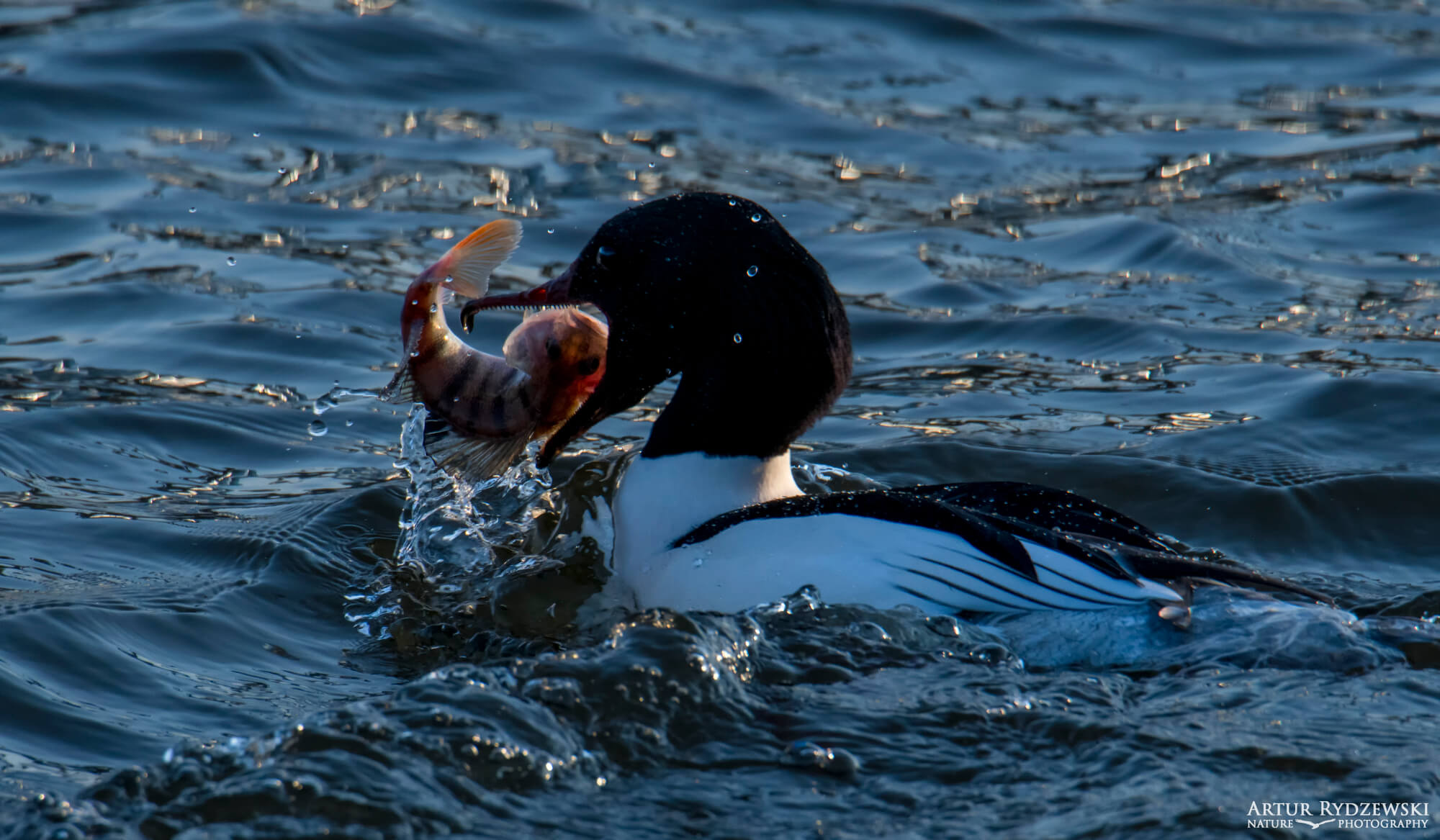
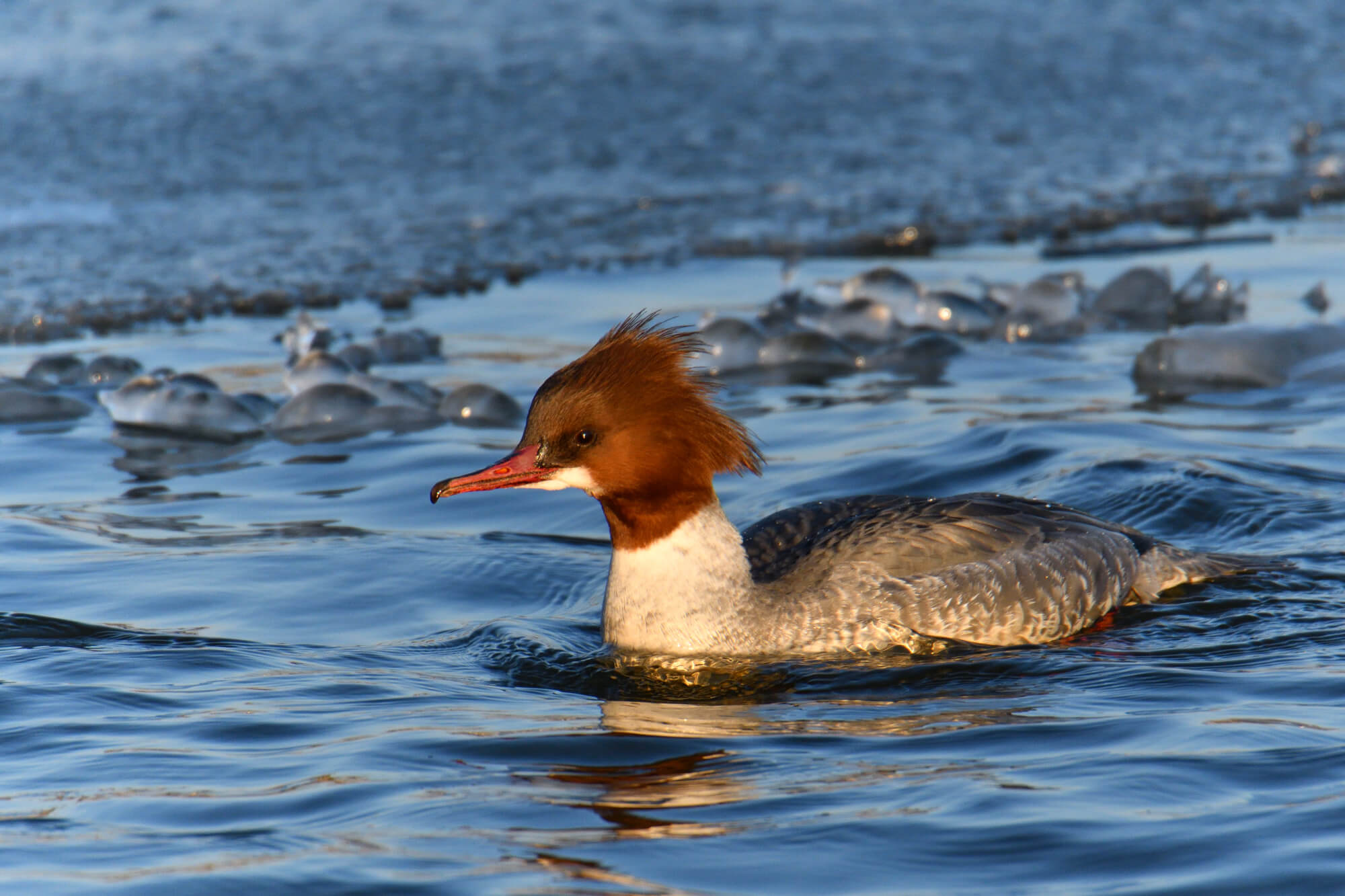
Common merganser, Mergus merganser
Size:
length about 57–68 cm (22–27 in), wingspan about 82–97 cm (32–38 in), weight about 0.9–2.1 kg.
IOC (v15.2): order Anseriformes, family Anatidae (ducks, geese and swans). In Britain the species is called the goosander. A large, slender diving duck. The male is black and white, with a glossy dark green head that has no crest and a thin red bill; in the breeding season the white of the body takes on a salmon tinge. The female is grey, with a russet, slightly crested head sharply divided from the white throat. The narrow bill with serrated edges is made for catching fish, which the merganser hunts by diving and swallows whole when large.
It nests by rivers and lakes near old trees, usually in a tree cavity, sometimes in a rock crevice or a big nest box. The female alone incubates, usually 8–11 eggs for about 30–35 days. In winter mergansers form larger flocks on lakes, reservoirs and open stretches of rivers.
In Poland about 1,500–2,500 pairs bred in 2013–2018; the species is spreading south along river valleys, and it is more numerous in winter. In Polish law the species has strict protection with active protection measures.
Did you know?
Merganser ducklings leave the cavity after a day or two simply by jumping out, and swim straight after their mother. Broods often merge after hatching: groups of more than 40 young led by one or several females have been recorded, and several females can nest in a single tree – in extreme cases up to ten have been described (the data come mainly from North America).

